Attention Veterinary and Sanitary Doctors!
“Milk from conditionally healthy cows with respect to tuberculosis in an affected farm and from tuberculin-reacting cows in a disease-free farm (during the period of determining the causes of their sensitization to tuberculin) shall be decontaminated by pasteurization in pasteurizers of existing systems at a regime of 85 °C for 30 minutes or at a regime of 90 °C for 5 minutes, and on infrared heating units at a regime of 79.5 °C ± 0.5 °C without holding.” (
Instruction on Measures for Prevention and Eradication of Animal Tuberculosis, Clause 6.1). All pasteurizers that do not provide the specified decontamination regimes are ordinary commercial pasteurizers and cannot be used for milk decontamination.
1. Equipment Selection, the Post-USSR Dairy Crisis & Why Holding Tubes Fail
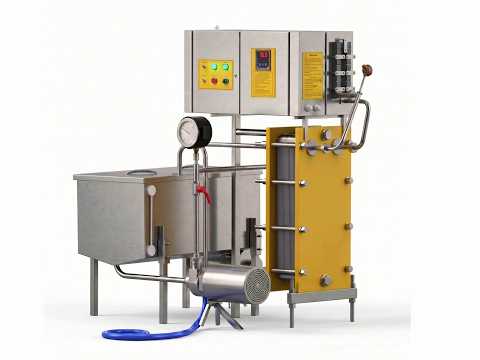
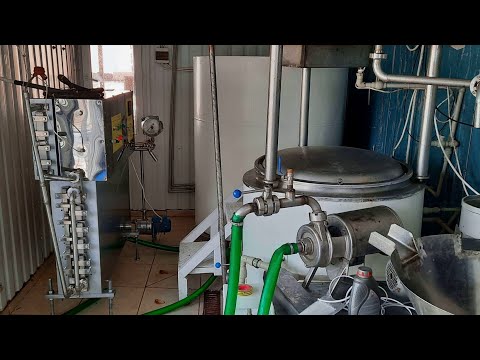
One of the most consequential moments in milk processing is the selection of equipment. It is essential to carefully draw up the technological scheme and verify whether even a single characteristic of the purchased equipment contradicts it. Whole milk is the foundation of foundations; therefore, the closer the product after primary treatment remains in its technological properties to native whole milk, the broader the spectrum of dairy products that can subsequently be manufactured from it. We present for your consideration the infrared milk pasteurizer UZM.
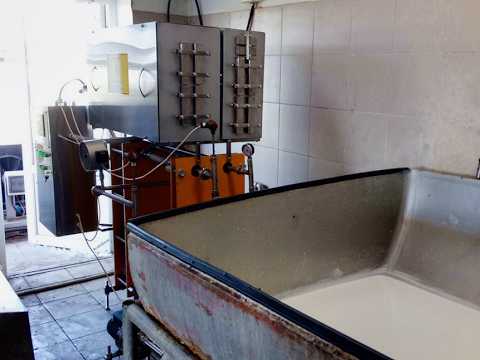
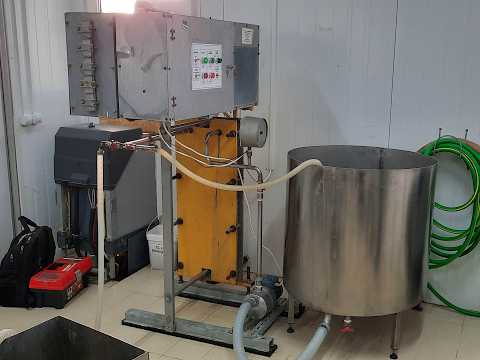
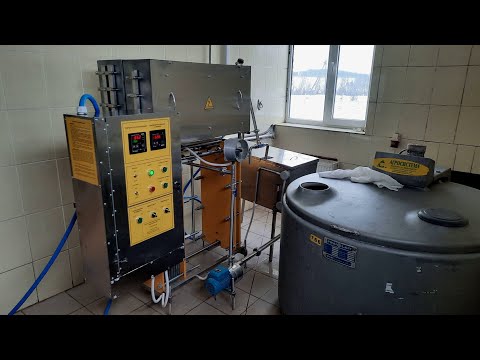
To date, more than 400 infrared electric heating pasteurizers of various modifications and capacities have been manufactured, the vast majority of which are successfully operating in the field. In Ukraine, these installations operate across every region of the country.
It should be noted that after the collapse of the USSR, dairy cattle farming in Ukraine, as in many other former Soviet republics, experienced a deep systemic crisis. On the one hand, cattle headcounts declined; on the other, milk yields dropped. Housing conditions for dairy cattle deteriorated due to a lack of funds for procuring balanced feed, repairing barn facilities, and coping with power outages. This led to a sharp rise in animal diseases — clinical and subclinical mastitis, tuberculosis, and bovine leukosis. Combined with elevated bacterial contamination of freshly milked raw milk, the question of primary milk treatment directly on the dairy farm became acute. Meanwhile, the vast majority of agricultural enterprises could not afford imported pasteurizers due to their prohibitively high cost.
With regard to veterinary milk decontamination, virtually everything that domestic manufacturers could offer fell into two categories: conventional installations attempting to maintain the regime mandated in the Instruction on Tuberculosis Control (holding milk heated to 90 °C for 5 minutes, or heated to 85 °C for 30–35 minutes), and infrared heating pasteurizers, which guarantee complete milk decontamination against tuberculosis, leukosis, and brucellosis at a temperature of 79 °C without holding time, in continuous flow. To implement the 90 °C / 5-minute regime, conventional milk pasteurizers are fitted with an external holding tube (holder) in which the heated product resides for the required duration — a design that negatively impacts both energy consumption during milk treatment and the quality of equipment washing.
One crucial physical subtlety cannot be overlooked: hot product inside an unheated holding tube cools down. When one takes into account that the same Instruction on Tuberculosis Control requires holding milk heated to 85 °C for a full 30 minutes, it becomes obvious that guaranteeing a certified decontamination regime using an external holding tube is physically impossible.
Specifically, an installation with a flow capacity of 1 ton per hour (1,000 L/h), in order to hold milk for 5 minutes, must have a holding tube with an internal volume of at least 80 liters. Over those 5 minutes, the milk cools by more than 5 °C — meaning the required holding time legally jumps to at least 30 minutes. Yet over 30 minutes, the product cools down far more severely!
Furthermore, the flow of milk inside a holding tube of such large volume is laminar, causing rapid deposition of milk stone on the internal walls. For the exact same hydrodynamic reason, washing the unit in Clean-in-Place (CIP) circulation mode is ineffective.
Batch milk pasteurizers, in which the product is heated inside a jacketed vat, are free of holding-tube cooling drop. However, they are also deprived of a heat recuperator, which saves up to 80% of the energy required for heating. Moreover, after heating milk to 85 °C in a vat, the milk must be cooled down, consuming massive quantities of cooling water and electricity. At the same time, one should note the indispensability of batch long-hold pasteurization vats in specific technological processes: holding whey and milk with starter cultures or coagulants at a set temperature for an extended period during the production of yogurts, kefir, and certain varieties of cheese.
If milk is heated by steam, a dedicated steam boiler house is required. Steam pasteurizers are economically viable only at flow capacities above 10 tons per hour. Pasteurizers that use a hot-water jacket to heat milk are inferior in energy efficiency to infrared pasteurizers because they heat an intermediate heat-transfer medium (water) instead of heating the product directly. And whenever a water-jacket flow pasteurizer must be converted into a veterinary decontaminator, the problem of the external holding tube with all the aforementioned defects immediately resurfaces.
Against this backdrop, it can be stated that alongside infrared pasteurizers (whose decontamination regime is officially approved by the Instruction on Tuberculosis Control, the Main Directorate of Veterinary Medicine with the State Veterinary Inspectorate, the Ministry of Health of Ukraine, and the Deputy Chief State Sanitary Doctor of Ukraine), conventional domestic manufacturers offer equipment that either does not differ in principle from designs used 50 years ago, or fails to maintain the legally mandated decontamination regime.
2. Technological Versatility & Prophylactic Biosecurity Against Skim-Milk Infection
Infrared milk pasteurizers (UZM) are today the only equipment on which milk decontamination takes place at 79.5 °C in continuous flow (without holding time). At lower pasteurization temperatures, UZM operates as an ordinary commercial pasteurizer.
Thus, if a UZM unit is purchased by a farm affected by tuberculosis or leukosis, the farm will have no difficulty delivering milk to a dairy plant, because the gentle pasteurization-decontamination regime (79.5 °C without holding) preserves all native technological properties of the product. Both thermal and mechanical impact on the milk are minimized, and the farm simultaneously resolves the problem of safe calf feeding.
If a high-capacity UZM unit is purchased by a mini-dairy workshop or a dairy processing plant, milk after pasteurization can be packaged directly. In terms of organoleptic characteristics and vitamin retention, UZM surpasses traditional pasteurization equipment while providing a longer shelf life. Moreover, from milk treated on an infrared pasteurizer, processors can manufacture virtually the entire spectrum of fermented sour-milk products, butter, cream, hard cheeses, casein, dry milk powder, and infant food. Industrial production lines for all of the above products are equipped with infrared pasteurizers. The standard pasteurization regime (pasteurization temperature below 79.5 °C) is even less energy-intensive while remaining highly effective against less resistant harmful microorganisms.
Let us address the necessity of primary milk treatment on the dairy farm. Most farms ship raw milk to dairy processing plants and therefore only need to preserve the evening milking until morning — for which chilling without pasteurization suffices. However, if a farm wishes to sell its milk independently in a district or regional center, a pasteurizer is essential for two reasons:
- Compliance with veterinary and sanitary regulations;
- Maintaining milk acidity and bacterial contamination within regulatory limits throughout the day. Furthermore, if unpasteurized raw milk is not completely sold during the day, it spoils by evening. Unsold pasteurized milk, by contrast, can be re-chilled overnight and sold the following day without any loss of quality or organoleptic properties.
Some farms also manufacture finished dairy products themselves, where the technological process requires milk pasteurization; while their share is still modest, it has been growing steadily.
The necessity of veterinary milk decontamination looks altogether different. Up until the year 2000, the typical scenario looked like this: an infrared pasteurizer was purchased by a farm only after quarantine had already been imposed or when the farm stood on the verge of quarantine. Already financially strained farms were forced to spend colossal material and labor resources on herd and facility eradication measures.
Prophylactic measures cost десятки (dozens of) times less. Today, milk processing is centralized at dairy plants, which is economically justified. However, the flip side of centralized processing is the ease with which tuberculosis and leukosis spread across healthy farms that use the services of the same dairy plant as an affected farm. Forward-thinking farm directors fully understand this risk. Following the privatization of agricultural enterprises and the improvement of their financial standing, the number of farms purchasing infrared pasteurizers specifically for prophylactic biosecurity rose sharply. Today there are districts in which up to 60% of dairy farms are equipped with infrared milk pasteurizers. Field experience shows that from a veterinary-sanitary standpoint, the most effective strategy is the acquisition of infrared units by several farms within a district, or the installation of a single high-capacity UZM unit at the central dairy processing plant. This latter option completely eliminates a major vector of pathogen introduction onto healthy farms: when an agricultural enterprise delivers raw milk to a dairy plant and takes back returned skim milk for feeding calves. Standard commercial pasteurization regimes at a dairy plant do not inactivate tuberculosis or leukosis pathogens, meaning infected skim milk from a diseased farm can easily enter a healthy farm’s calf barn unless decontaminated on an infrared UZM unit.
3. Milk Acidity (≤ 21 °T), Colostrum & Recuperator Preheating Formula
Field experience demonstrates that when operating infrared pasteurizers, the strictest requirements apply to raw milk titratable acidity and the absence of high colostrum concentrations. Prior to pasteurization, raw milk must be strained through lavsan filter cloth. Titratable acidity of raw milk must not exceed 21 °T. This is a universal requirement for all pasteurization installations equipped with a plate or tubular heat recuperator: when milk acidity approaches or exceeds 21 °T, milk proteins can coagulate not only in the heating section, but already inside the hot zone of the recuperator. Where milking technology does not allow separating early post-calving (transition) milk from bulk milk, or where summer milk collection and transport cannot guarantee acidity below 21 °T, PE Fomin R.G. offers specialized pasteurizers with an ultra-gentle heating regime (Special Design SK) at a competitive price.
Modern pasteurizers may differ in their method of heating the product, but what they share (outside of batch vats) is a plate or tubular heat recuperator used to reduce energy consumption and outlet product temperature. When a Customer faces the risk of high-acidity milk (above 21 °T) or colostrum-rich milk entering the pasteurization equipment, we apply the following formula:
trecup = tin + ηrecup · (tpast − tin)
(1)where trecup is the product temperature between the recuperator and the heating section (°C); tin is the initial inlet temperature of the product (°C); ηrecup is the heat recuperation coefficient of the heat exchanger; and tpast is the pasteurization temperature (°C).
If trecup upon substituting the operating data exceeds 68 °C, there is a danger that product with elevated colostrum content or acidity above 21 °T will coagulate inside the recuperator. This probability increases the closer trecup approaches 82 °C. As field experience confirms, protein fouling deposits form on the plates in plate recuperators and inside the tubes in tubular recuperators when milk with high colostrum content or acidity above 21 °T passes through, even under turbulent fluid motion regimes of:
where Re is the dimensionless Reynolds number.
Regardless of the quality of the milk being pasteurized, the washing technology must be strictly observed. Washing is performed in a semi-automatic Clean-in-Place (CIP) circulation mode using alkaline and acid solutions with intermediate and final water rinsing.
When operators observe the requirements for pre-filtering raw milk through lavsan cloth, controlling milk acidity and colostrum content, and following the CIP washing protocol, UZM installations require routine maintenance only once every several years (replacement of heat-recuperator rubber gaskets, infrared heating elements, and the mechanical shaft seal of the sanitary milk pump).
4. Leasing, AQ-teck Automation, Substation Voltage, Winter Operation & Practical Tips
In recent years, an acquisition model has become popular in which the raw-material department of a dairy processing plant, securing high-grade raw milk for its production, signs contracts with supplier farms and purchases UZM equipment for them under a leasing scheme.
Infrared pasteurizers are equipped with precision automation and temperature-regime recording instruments (digital AQ-teck controller, Disk-250 circular chart recorder), ensuring strict adherence to the pasteurization temperature regime and enabling the dairy plant to verify its supplier’s compliance.
Because the peroxidase test at such a low decontamination temperature (79.5 °C) will not show enzyme inactivation, either the pasteurization temperature is raised to 86 °C, or pasteurization quality is verified via the alkaline phosphatase test, or the milk batch is accompanied by its recorded pasteurization thermogram.
Farms, mini-dairies, and dairy processing plants planning to purchase a high-capacity infrared pasteurizer should pay close attention to the following practical engineering requirements:
- Local Substation Transformer Capacity & Voltage (≥ 210 V): Is the capacity of the local electrical substation transformer sufficient? If transformer capacity is insufficient under load, phase voltage can sag below the required minimum of 210 V. This is especially relevant for high-capacity pasteurizers operating during evening peak hours and in winter when grid load is elevated.
- Recuperation Ratio & Specific Energy Consumption: At a decontamination temperature of 80 °C, an infrared pasteurizer consumes 13 kWh per 1 ton of milk at a heat-exchanger recuperation coefficient of 83%, and just 9 kWh per 1 ton of milk at a recuperation coefficient of 89%. This is sufficient for the pasteurized product exiting the pasteurizer to have a temperature only 9 °C higher than before pasteurization. At the customer’s request, the recuperator can be fitted with an additional cooling section (in which case the customer supplies chilled ice water or brine). The recuperation coefficient can also be tailored to the customer’s process: reducing the recuperation ratio raises the outlet temperature of the pasteurized product (ideal for calf-feeding units and for cream separation or cheesemaking) with a corresponding increase in electricity consumption, whereas increasing the recuperation coefficient reduces energy consumption to 7–9 kWh/ton with only a 9% increase in unit cost.
- Room Temperature Above 0 °C in Winter: Because an infrared pasteurizer performs Clean-in-Place (CIP) circulation washing, upon completion of work its hydraulic circuit remains filled with water. Sub-zero freezing temperatures in the room can freeze and rupture sealed hydraulic assemblies. If the farm cannot provide centralized heating in the milk room, placing a simple electric space heater in the immediate vicinity of the pasteurizer is sufficient to keep the ambient temperature above 0 °C.
- Wash Water Pressure, 200 L Buffer Tank & Stainless Mesh Filter: Occasionally farms face unsatisfactory water supply for washing infrared equipment — either insufficient water pressure (the water supply must provide a flow rate per unit time equal to the hourly capacity of the pasteurizer, due to clogged pipes from water towers, high summer water draw, or an underpowered borehole pump) or water containing sand and rust. Where pressure is insufficient, an intermediate water storage tank (at least 200 liters) elevated 1.0–1.5 meters above the unit is installed to guarantee maximum flow. While rust is dissolved by the acid wash solution during CIP, sand can accumulate inside the recuperator and pump, reducing pasteurizer throughput and causing clogging. Field experience shows that a simple fine-pored stocking filter made of stainless-steel mesh on the water supply line completely guarantees clean wash water.
- Food-Grade PVC Milk Hoses & Training Two Operators: Food-grade PVC milk hoses have proven highly reliable: when warmed in boiling water, they fit tightly onto stainless-steel pipe fittings, preventing any milk leakage or air ingress. We also advise buyers to designate 2 operators in advance (so they can substitute for each other when needed). When operators are appointed beforehand rather than at the last minute, they can observe the installation and commissioning of the unit from the very beginning, learning how to operate the equipment and studying its construction firsthand. Commissioning is performed free of charge and typically takes only a few hours.
- Standard Room Requirements (1.5 × 2.0 m): The infrared pasteurizer is mounted on a floor area of just 1.5 × 2.0 meters, which already includes convenient operator access from all sides. Standard dairy room requirements apply: floor sloped toward the drain, tiled or oil-painted walls, a protective grounding loop, and a three-phase 380/400 V power supply.
5. Farm Profitability, Calf Health & Dairy Product Applications
By purchasing an infrared pasteurizer, a dairy farm simultaneously solves multiple strategic tasks: safe calf feeding, prophylaxis of tuberculosis and leukosis, primary milk treatment, and the ability to package drinking milk or sell it directly from an insulated tank.
The highest demand is for pasteurizers with capacities of 0.2 to 1.0 ton/hour (200 to 1,000 L/h). Pasteurizers with capacities of 200–500 L/h are widely purchased by dairy farms to decontaminate mastitic and non-grade milk for feeding calves. Higher-capacity pasteurizers of 600–3,000 L/h are purchased by mini-dairies and cheese plants; after pasteurization, the milk is either packaged into pouches/bottles or directed to a cream separator, homogenizer, or cheese vat.
As soon as a farm begins feeding calves decontaminated milk from an infrared pasteurizer, calf diarrhea, morbidity, and mortality drop sharply — and non-grade mastitic milk turns from a financial loss into a reliable source of profit.
Milk packaged in polyethylene pouches after pasteurization on an infrared UZM pasteurizer keeps for up to 10 days. Among the farms and mini-dairies operating infrared pasteurizers are manufacturers of hard and soft cheeses, butter, and cream. When milk pasteurized on an infrared pasteurizer is processed on a cream separator, the plant obtains pasteurized, microbiologically clean cream and skim milk simultaneously.
For engineering consultations and orders of infrared milk pasteurizers, contact PE Fomin R.G. by phone: +380503257808, +380503257812, or email: pasteurizer.ir@gmail.com.